
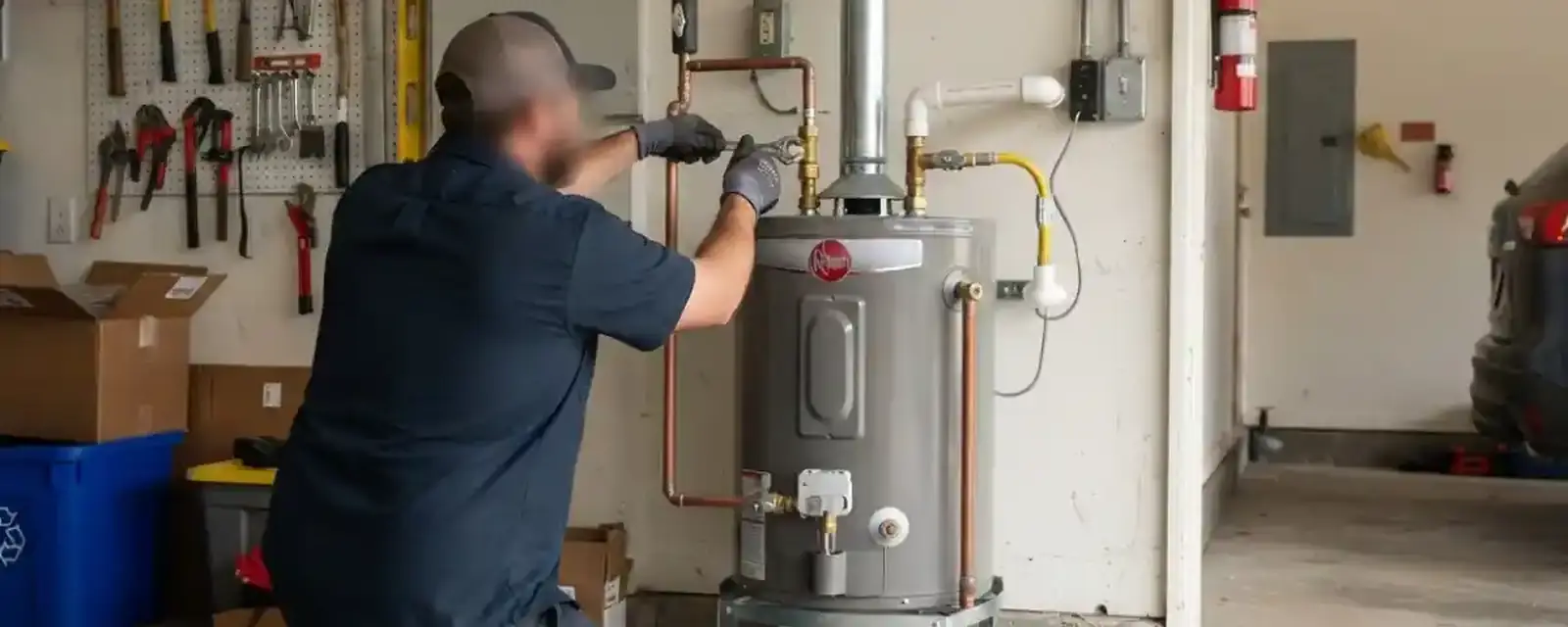
What goes into a proper water heater installation
A new install is more than connecting two pipes. The plumber confirms fuel, size, venting, floor space and the drain location, then sets the heater level and secured. Piping, shutoff valves, a relief valve with a safe discharge line and an expansion tank where the system needs one complete the job.
Gas units add vent sizing, a gas shutoff, a drip leg and combustion air. Electric units need the right breaker and wire gauge. Hybrid units need clearance for airflow and a condensate drain. We check each of these before quoting.
Oregon permit and code points that decide a good install
The Oregon Building Codes Division states that plumbing permits are required for water heaters and that an owner who does the work personally must get the permit. In its guidance on water heater replacement it lists items to consider: raising a heater in a garage, anchoring against earthquakes, relief valve termination, thermal expansion protection and combustion air.
The same guidance says some things are not required, such as drip pans, pipe sizing changes or a pressure limit under 80 psi. We follow the state's list and your local building department's decisions, and we do not guess where the rules are uncertain. The underlying code is the Oregon Plumbing Specialty Code, which is based on the Uniform Plumbing Code (UPC). Ask the Beaverton building department how it handles your permit.
Where in your home the heater goes
| Location | What the installer checks | Common fix |
|---|---|---|
| Garage | Ignition source height and impact protection | Raise the unit on a stand where required. |
| Closet or utility room | Clearance, venting and combustion air | Louvered door or duct for air. |
| Attic or crawlspace | Access, drain pan and leak risk | A drain line to a safe place. |
| Basement | Floor drain and flood risk | Place on a stand, drain to the floor drain. |
Much of Beaverton's housing was built between the 1960s and the 1990s, and original utility closets can be tight for newer, bigger units. Telling us the model and location speeds the quote.
Fuel and type options
- Gas tank: fast recovery, needs venting and a gas supply.
- Electric tank: simple venting, slower recovery.
- Hybrid heat pump: efficient electric heat and needs air space.
- Tankless: on-demand hot water, see tankless water heater service.
If your tank has failed and you want to compare, the replacement page covers the emergency side.
What affects installation price
- Unit and capacity. A bigger tank or a hybrid costs more.
- Venting and fuel lines. New vent runs or gas lines add labor.
- Code items. Seismic strapping, expansion tank and discharge pipe.
- Permit. Handled with the job, fee separate.
- Haul-away. The old tank is removed.
Water heater installation is usually a homeowner expense, though some rebate programs may apply. Check with your utility. We give a clear price before work starts.
Before the installer arrives: a short checklist
- Clear a path and the space around the old heater.
- Know where the cold water shutoff and the gas or electric disconnect are.
- Note the make, model and fuel of the current unit, and take a photo of its label.
- Plan for a few hours without hot water on a same-type swap.
- Tell the installer about any past leaks or odd noises.
That information lets the plumber arrive with the right parts. A heater that does not match the old connections can add hours to the job.
Ready to schedule a water heater install? Call and give us the model and location.
After the install: the first week
Check around the base and the fittings for dampness over the first few days. Hot water should reach the tap within a normal wait and the heater should cycle quietly. A new gas unit may have a slight odor from the new parts burning off, which fades quickly. A gas smell that lingers is not normal, so leave the house and call the gas utility or 911.
Keep the permit paperwork and the manual together with your home records. If you ever sell, the record of permitted work is useful.
Water heater installation questions
Oregon requires plumbing permits for water heaters, including when an owner does the work. Ask the Beaverton building department for specifics. A licensed plumber normally handles the permit.
It depends on household size, bathrooms and peak use. A plumber can recommend a capacity, and a larger household may do better with a bigger tank or tankless unit.
It absorbs the pressure rise as water heats in a closed system. Thermal expansion protection is one of the points listed in state water heater guidance, so many installs include one.
Often yes, with extra piping and sometimes venting or wiring. Call and describe where you want it.
Oregon's Building Codes Division runs a public license search. The state says a plumber needs a BCD license plus either a Construction Contractors Board license or employment with a CCB-licensed business.