
Where water in a basement comes from
Basement water has a few sources, and the fix depends on which. Groundwater pushing through walls or the floor slab is one. A failed supply pipe, a drain backing up or a water heater leak are others. Waterproofing a foundation does nothing for a pipe leak.
| Clue | Likely source | Next step |
|---|---|---|
| Water appears only after heavy rain | Groundwater or surface runoff | Check gutters, grading and drainage. |
| Water appears with no rain | Plumbing leak | Meter test, see leak detection. |
| Water comes up at the floor drain | Sewer or drain backup | See sewer line cleaning. |
| Puddle near the water heater | Tank or fitting | See water heater repair. |
| Damp walls with a white powder | Moisture through masonry | Drainage and sealing. |
Rule out plumbing in thirty minutes
- 1
Shut off all water and read the meter.
If the dial moves with every fixture off, you have a leak.
- 2
Check the water heater and washing machine hoses.
These are common leak sources in basements.
- 3
Look at drain lines and cleanouts.
Staining around cleanouts suggests a drain problem.
- 4
Pour water into the floor drain.
If it drains slowly, the line may be partly blocked.
Common waterproofing approaches and what they do
| Approach | What it does | Limits |
|---|---|---|
| Fix gutters and grade | Moves surface water away | Inexpensive, first step. |
| Interior sealers and waterproof coatings | Reduce seepage through masonry | May not hold against strong water pressure. |
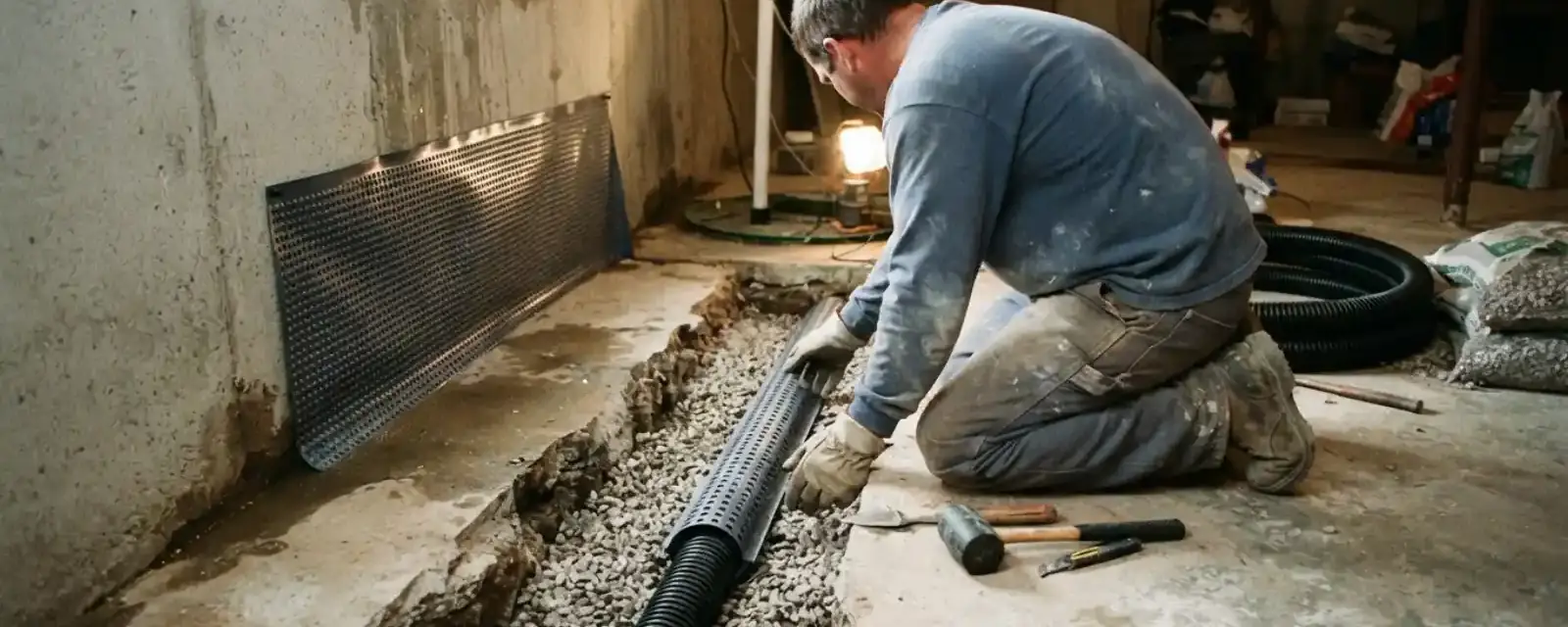
| Interior drain and sump pump | Collects water and pumps it out | Needs power and maintenance. |
| Exterior excavation and membrane | Stops water at the foundation wall | Most disruptive and expensive. |
Waterproofing contractors and masons handle most of these. A plumber's job here is to verify the pipes are not the problem and to handle the sump pump discharge and floor drains. Drain and discharge piping follow the Oregon Plumbing Specialty Code, which is based on the Uniform Plumbing Code (UPC).
Local note: how common basements are in Beaverton and what to ask
Not every Beaverton house has a basement. Many are slab-on-grade or have crawlspaces, so check what your home actually has before assuming a basement solution. Find the build year in county records, since construction style changed across the decades.
The City's water is soft, typically 1.5 to 3 grains per gallon, and its report lists no known lead service lines. None of that tells you about groundwater at your address. Ask a waterproofing contractor for the cause and for evidence. Sump pump discharge and floor drains connect to plumbing, so ask the Beaverton building department about permits for any new drain work.
About 52 percent of homes here are rented, so report a wet basement to the owner. For nearby Hillsboro homes, see the Hillsboro page.
What a plumber can do for a wet basement
We find and repair plumbing leaks, clear floor drains and sewer backups, and check that a sump pump discharge is routed correctly. If the water is not from plumbing, we say so and point you toward a waterproofing contractor. A camera look at the sewer line is useful too, see sewer inspection.
Keep notes on when the water appears and where. A simple timeline helps any contractor you call.
Questions to ask a waterproofing contractor
- What is the source of the water, and how did you confirm it?
- Will the fix manage water at the wall or the floor, and what happens during a heavy storm?
- What does the warranty cover, and who honors it?
- Will any work involve plumbing, drains or a sump pump discharge, and who handles the permit?
- Can you show me an example of a similar job?
A contractor who can explain the cause in plain terms is worth more than one who quotes a package. Get at least two opinions before a large excavation.
The first free fixes
Clean the gutters, extend downspouts several feet from the house and check that the soil slopes away from the foundation. These steps cost little and handle a surprising share of damp basements. Call a plumber when the water has no connection to rain.
Water in the basement with no rain? Call and we will check the plumbing first.
Keep a record of when the water appears
A simple log of dates, rainfall, where the water shows and what the meter did is the best tool you can hand a contractor or a plumber. Add photos with a tape measure for scale. It turns a vague complaint into something that can be diagnosed.
Sump pumps in plain terms
A sump pump sits in a pit that collects groundwater and pushes it out through a discharge pipe. Test it by pouring a bucket of water into the pit and watching it switch on. Check that the discharge pipe sends water away from the house and has a check valve so it does not flow back.
A battery backup helps during a storm power outage. If your sump pump runs constantly or never runs, have it checked.
Wet basement questions
Water that appears with no rain, a meter that runs with everything off or water near pipes and appliances all point to plumbing.
No. Waterproofing addresses groundwater and seepage. A leaking pipe needs a plumber.
Some do and many do not. Check your home's records before assuming.
A sump pump moves collected groundwater out. Its discharge should be routed to a suitable place, and a plumber can check it.
Yes, promptly, and keep photos. Moisture damage grows quickly.