
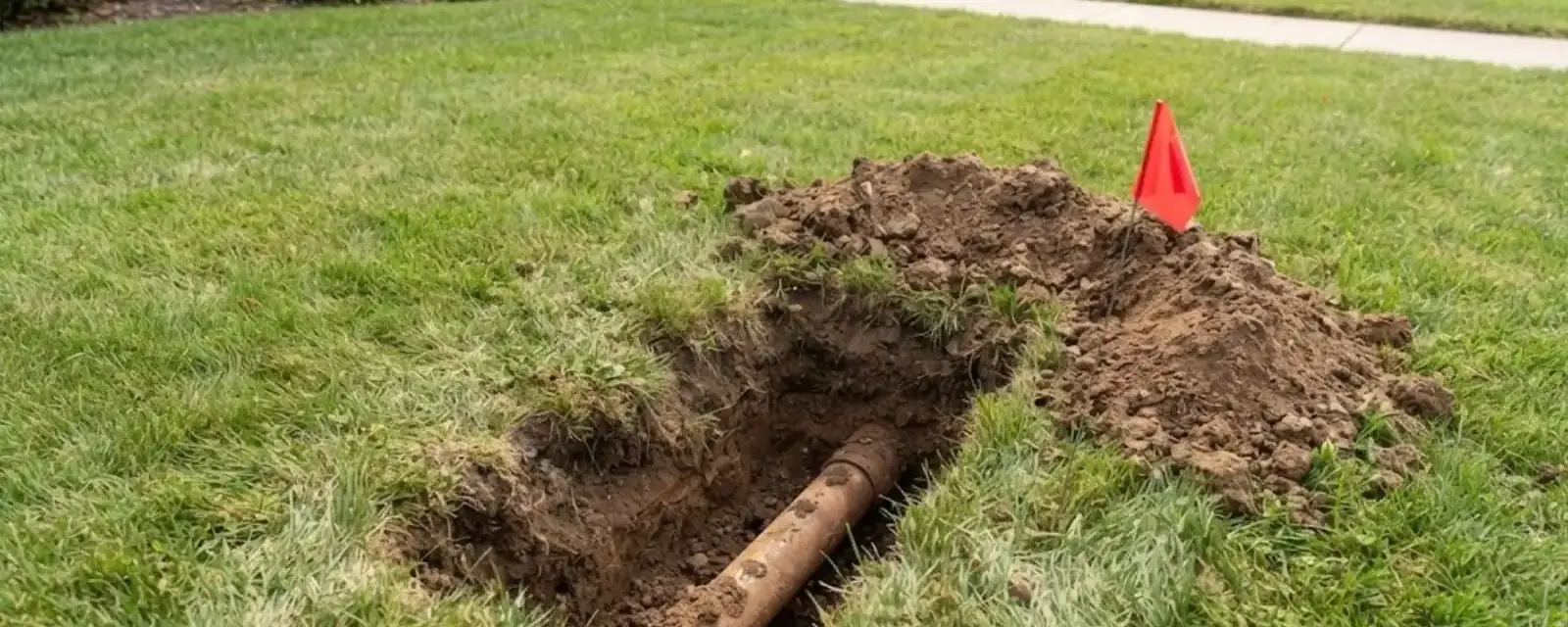
The dividing line
Clean Water Services provides sewer service in much of Washington County. Its lateral repair guidance says the private lateral, the pipe from your house to the public sewer, belongs to the property owner. CWS responsibility begins at the public mainline.
So a clog or break in the pipe on your property is yours to fix. A defect in the public mainline is CWS's. The gray area is the stretch of lateral that runs under the street or sidewalk, the public right of way.
What CWS repairs in the right of way
CWS guidance says it repairs structural defects in laterals that run through the public right of way. It lists examples: cracked or crushed pipe, open or offset joints and root intrusion. A belly, where the pipe sags and holds water, is not considered a structural defect.
| Defect | CWS repair in the right of way? | Why it matters |
|---|---|---|
| Cracked or crushed pipe | Yes, per guidance | Structural. |
| Open or offset joint | Yes, per guidance | Structural. |
| Root intrusion | Yes, per guidance | Structural defect at a joint. |
| Belly | No, not structural | Owner's issue. |
| Defect on private property | No | Owner's responsibility. |
How to document a problem so it can be assessed
- 1
Get a camera inspection.
A sewer camera inspection records the pipe and marks where a defect sits.
- 2
Note the footage and location.
The distance from the cleanout and from the property line shows whether the defect is in the right of way.
- 3
Send the video to CWS field operations.
The guidance says to submit video so the defect can be reviewed.
- 4
Ask the building department about permits.
Repairs generally need a permit from the city or county building department.
If the line is blocked, a plumber clears it first so the camera can see. See sewer line cleaning. If the pipe is broken, the next page is sewer line repair.
Local note: renters, buyers and older Beaverton lateral lines
Beaverton grew from about 6,000 residents in 1960 to more than 50,000 by 1990, per the Oregon Encyclopedia. Many laterals are now 35 to 65 years old, and root intrusion at joints is a common finding on older clay lines.
If you are buying, a camera inspection before closing shows what you would be taking on.
If you rent, about 52 percent of Beaverton homes are rented per the 2020 Census, so a lateral repair is the owner's cost and a backup should be reported at once. The guidance applies to Washington County lateral lines, so Hillsboro-side homes may fall under different rules, as the Hillsboro page notes for contacts. Ask CWS or the city for the specifics for your address.
What to do when the line is backing up now
Stop using water and call. A backup is an emergency, and getting the line open is the first step before any question of responsibility. Ask the plumber to record video so you have it for the owner, CWS or your insurer.
Insurance often excludes lateral wear and roots, though some policies add a service-line endorsement. Lateral repairs themselves follow the Oregon Plumbing Specialty Code, which is based on the Uniform Plumbing Code (UPC). Read yours before the next problem.
Signs your lateral may need attention before it fails
- Repeated clogs in the same line after cleaning.
- A sewer odor outside near the cleanout or the property line.
- A greener, wetter strip of lawn along the line.
- Slow drains in the lowest bathroom or the basement floor drain.
- Gurgling in toilets when the washing machine drains.
None of these prove a defect, but any of them is a reason to run a camera. A video costs less than a surprise backup and gives you something concrete to send to the owner, your insurer or Clean Water Services.
Questions to ask before you buy or sell a house
Ask whether the lateral has ever been scoped, whether there is a cleanout and whether any repairs were permitted. If the seller has no records, a camera inspection during your due diligence period shows the condition.
Want a camera look at your lateral? Call to schedule an inspection.
A short glossary for the conversation
- Lateral: the pipe from your house to the public sewer.
- Mainline: the public sewer pipe under the street.
- Cleanout: a capped access pipe on the lateral.
- Right of way: the public strip along the street, including sidewalk areas.
- Belly: a sag in the pipe that holds water.
Using these words correctly helps the plumber, CWS and your insurer understand each other faster.
One more practical tip
Ask your plumber to note on the video where the cleanout sits and how far down the pipe each defect appears. Those two numbers make the footage far more useful to whoever reviews it.
Sewer lateral responsibility questions
Per Clean Water Services guidance, the private lateral belongs to the property owner, and CWS responsibility begins at the public mainline.
CWS guidance says it repairs structural defects in laterals in the public right of way, such as cracked or crushed pipe, open or offset joints and root intrusion.
Not under the guidance. A belly is treated as the owner's issue.
The guidance says to submit it to CWS field operations. Contact CWS for its current process.
Guidance says repairs need a permit from the building department of the city or county. Ask before authorizing work.