
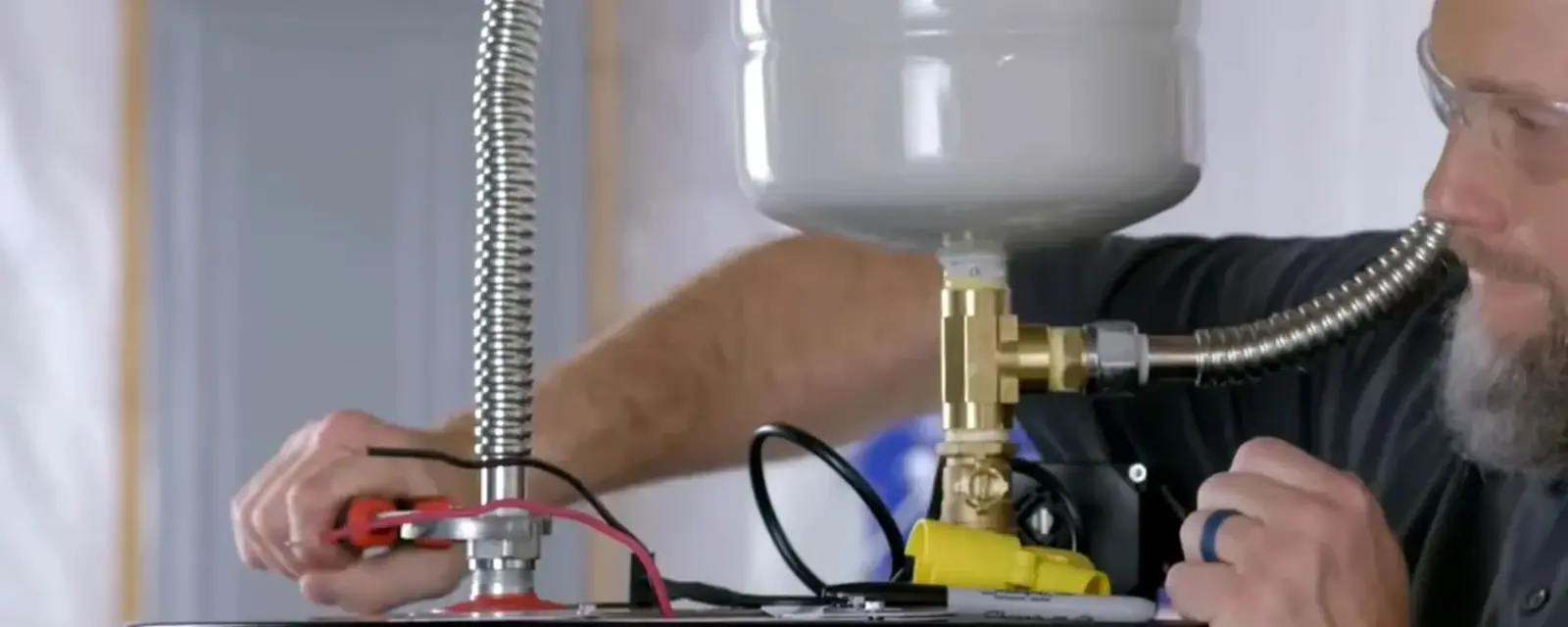
What an expansion tank does
When water heats, it expands. In an open system the extra volume pushes back into the city main and nobody notices. In a closed system, where a check valve or pressure reducing valve blocks that path, the extra volume has nowhere to go and pressure rises fast.
An expansion tank is a small steel tank with a rubber diaphragm. One side holds air and the other connects to the cold water line near the heater. As pressure rises, water pushes into the tank and compresses the air, which absorbs the spike. When the water cools, the air pushes it back.
Without it, the relief valve on the water heater may drip every time the heater cycles, and repeated pressure spikes strain fittings, faucets and the tank itself.
Do you need one? Signs and the Oregon guidance
Thermal expansion protection is one of the items the Oregon Building Codes Division lists in its interpretation of the state plumbing code for water heater replacement. Other items on that list are raising garage heaters, seismic anchoring, relief valve termination and combustion air for gas units.
The same guidance says some things are not required when replacing a heater, such as pipe sizing changes, drip pans or addressing pressure that is under 80 psi. So the answer depends on your system. A plumber can check whether you have a check valve or pressure reducing valve that closes the system, and test the static pressure at a hose bib.
- A relief valve that drips or weeps after hot water use.
- A banging pipe or a hammer when the heater finishes a cycle.
- A water pressure reading above normal at the hose bib.
- A newer house or replacement with a pressure reducing valve at the main.
How the installation works, step by step
- 1
Choose the size.
Tank size depends on heater capacity and the water pressure in your house. The plumber matches the tank to the heater and your pressure reading.
- 2
Shut off water and drain the line.
The cold supply is closed and the line near the heater drained so a tee can be installed.
- 3
Install the tee and the tank.
A tee on the cold line near the heater holds the tank, usually hanging down or supported by a bracket for heavier tanks.
- 4
Set the air pressure.
The tank's air charge should match the house pressure. It is checked with a gauge and adjusted before the water goes back on.
- 5
Test for leaks and pressure.
Water is restored, air is bled and the relief valve is watched through a heating cycle.
Permit rules apply when the heater is replaced. Oregon requires plumbing permits for water heaters, so ask the Beaverton building department how it handles a standalone expansion tank. Oregon's plumbing code, the Oregon Plumbing Specialty Code, is based on the Uniform Plumbing Code (UPC). When we replace a heater, the permit is part of the job and see water heater installation.
Checking whether your expansion tank still works
These tanks fail quietly. The diaphragm can tear and the tank fills with water, or the air charge leaks away.
- Tap the tank. A healthy one sounds hollow on top and solid at the bottom.
- Press the air valve stem. Water spitting out means the diaphragm has failed.
- Check the air pressure with a gauge when the system is drained and shut off.
- Watch for a dripping relief valve, a sign the tank is waterlogged.
Local note: what Beaverton's water and rules mean for your tank
Beaverton's water is soft, typically 1.5 to 3 grains per gallon in the city's own report, and it comes mostly from the Joint Water Commission plant on the upper Tualatin River. Soft water means little scale on an expansion tank fitting, so failures here come more from age than from build-up.
The City says it knows of no lead service lines. That is about its mains and services, not your interior pipe. If your home is old, ask the plumber what your supply lines are made of when the tee goes in. A permit question for your address goes to the Beaverton building department, and for Hillsboro-side homes to the Hillsboro page area contacts you already use.
When to call a plumber
A handy homeowner can swap a small tank, but the gas, electrical and permit work around a water heater add risk. If the relief valve is dripping now, hot water is the one thing you cannot use freely, and a leaking heater is covered under water heater repair.
A new heater with a new tank is the cleanest time to add one, because the cold line is already open. Ask about it on your next water heater replacement.
Expansion tank questions for Beaverton homeowners
Thermal expansion protection is one of the points the Oregon Building Codes Division lists for water heater replacement, but whether your home needs one depends on whether the system is closed. A plumber can check for a check valve or pressure reducing valve at your main.
Many last several years, and the diaphragm or air charge can fail sooner. Tap it and test the air valve once a year.
A closed system with no expansion tank, or a waterlogged one, lets pressure climb until the valve opens. Fixing the tank usually stops the drip.
Soft water leaves little scale, so the tank is likely to fail from age or a bad diaphragm and not from mineral build-up.
Ask the Beaverton building department. Oregon requires permits for water heaters, and your plumber can handle the paperwork when a heater is installed.