
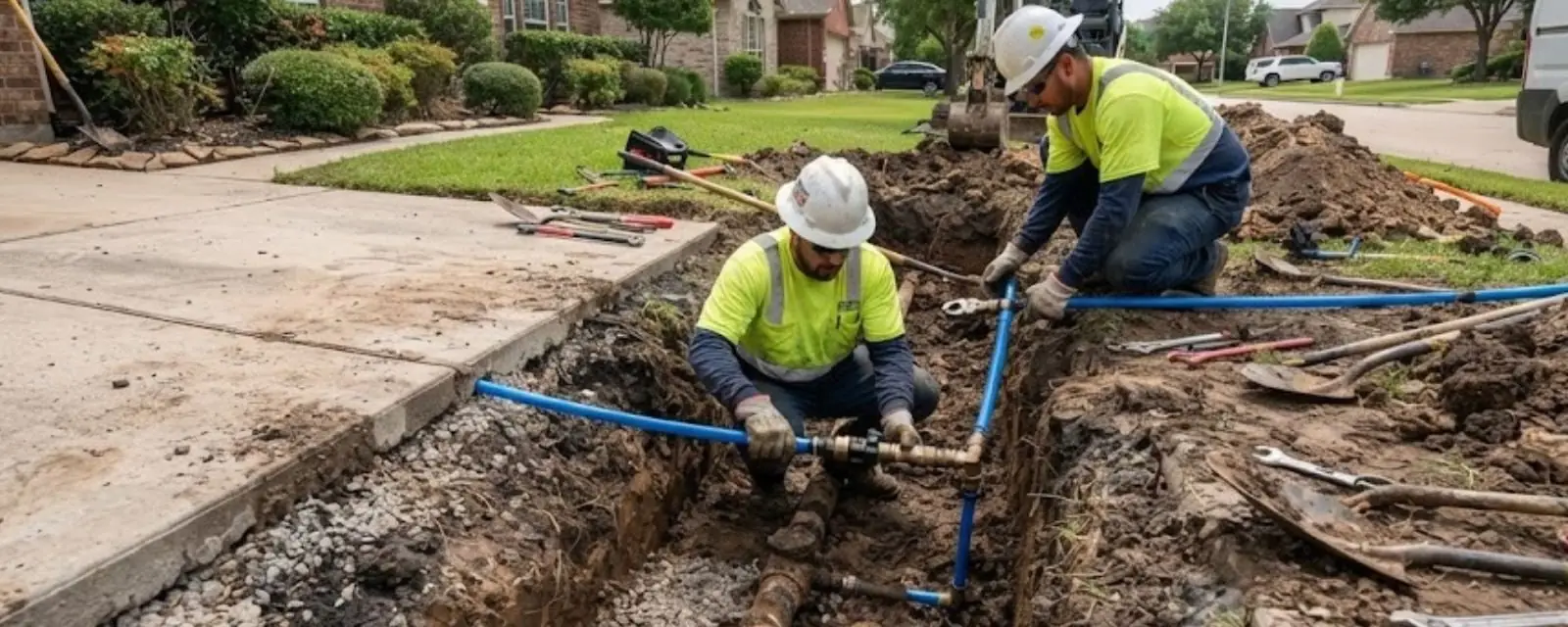
No water, or a flooded yard: what to do first
- Close the main shutoff valve at the house. If water still runs at the meter, the break may be before the shutoff.
- Do not dig yourself. Call 811 before any digging so buried utilities are marked.
- If water is pooling near the street, note where and tell dispatch. The part before the meter belongs to the water utility.
- Photograph the wet area and the meter reading.
Yard flooding or no water? Call now.
What the water service line is and where responsibility changes
The service line is the pipe that carries water from the public main under the street, past the meter, into your house. The utility owns the line up to and including the meter in most places. The line from the meter to the house is typically the owner's. The City of Beaverton publishes pages on water meters and other utilities, and some Beaverton addresses are served by providers other than the City.
That matters because you should confirm which utility serves your address before you call anyone. A leak on the utility side is the utility's to repair, and a leak on the house side is yours. Dispatch will help you work out which side the leak is on. Repairs to the line are done to the Oregon Plumbing Specialty Code, which is based on the Uniform Plumbing Code (UPC).
Signs the service line is failing
| Sign | What it suggests | Next step |
|---|---|---|
| Meter runs with fixtures off | Leak after the meter | Pressure test and leak detection. |
| Wet or sunken patch in the yard | Leak along the line route | Locate and excavate the spot. |
| Low pressure at every fixture | Partial failure, corrosion or a stuck valve | Check shutoff, then test the line. |
| Discolored water after a pause | Corroded metal pipe | Consider replacement. |
| No water at all | Break or closed valve | Shutoff check, then find the break. |
Repair, replacement and trenchless options
A single break near a fitting is a spot repair. A line with several breaks, or one made of old galvanized steel, is usually better replaced with modern pipe. Trenchless methods, such as pulling new pipe through the old path, avoid digging a long trench through landscaping and driveways.
Beaverton's housing stock includes many homes from the 1960s through the 1990s, and the service lines in them are now old. If your line is original, replacement is worth asking about when you have the line exposed for repair.
Permits for work on the line come from the city or county. Ask the Beaverton building department before you authorize digging. Whole-house supply problems are covered under repiping.
Why the pressure and the water quality are worth a check
The City of Beaverton reports that its water is soft and that it knows of no lead service lines. That is the city's statement about its system. If your home is old and has its own metal pipe, ask a plumber what the line is made of, which is a simple visual check at the meter or inside the basement.
Low pressure after a repair or a pressure spike may point to a pressure reducing valve near the main shutoff. A plumber can test pressure with a gauge on a hose bib, and it is quick.
What affects the price
- Length and depth. Longer lines mean more excavation or pulling.
- Method. Open trench, spot repair and trenchless differ.
- Surface. Driveways, patios and landscaping affect restoration.
- Permit. Ask the building department what applies.
- Hours. Emergency hours follow emergency rates, quoted first.
Standard homeowner insurance seldom covers the line itself, but some insurers sell a service line endorsement. Check yours. We give a clear price before starting.
Water service line questions
Yes. The line is answered at all hours. Close the shutoff at your house, tell dispatch what the meter is doing, and a plumber is assigned to your address.
Generally the utility owns the line to the meter and you own the line from the meter to the house, but check with the utility that serves your address.
Galvanized steel is gray and attracts a magnet, copper is reddish brown, and plastic lines are white, blue or black. A plumber can confirm.
Often yes with trenchless methods, depending on the soil, the pipe path and access. A site visit confirms what is possible.
Possibly, or a stuck pressure reducing valve or a partly closed shutoff. A gauge test and a look at the shutoff find the cause quickly.