
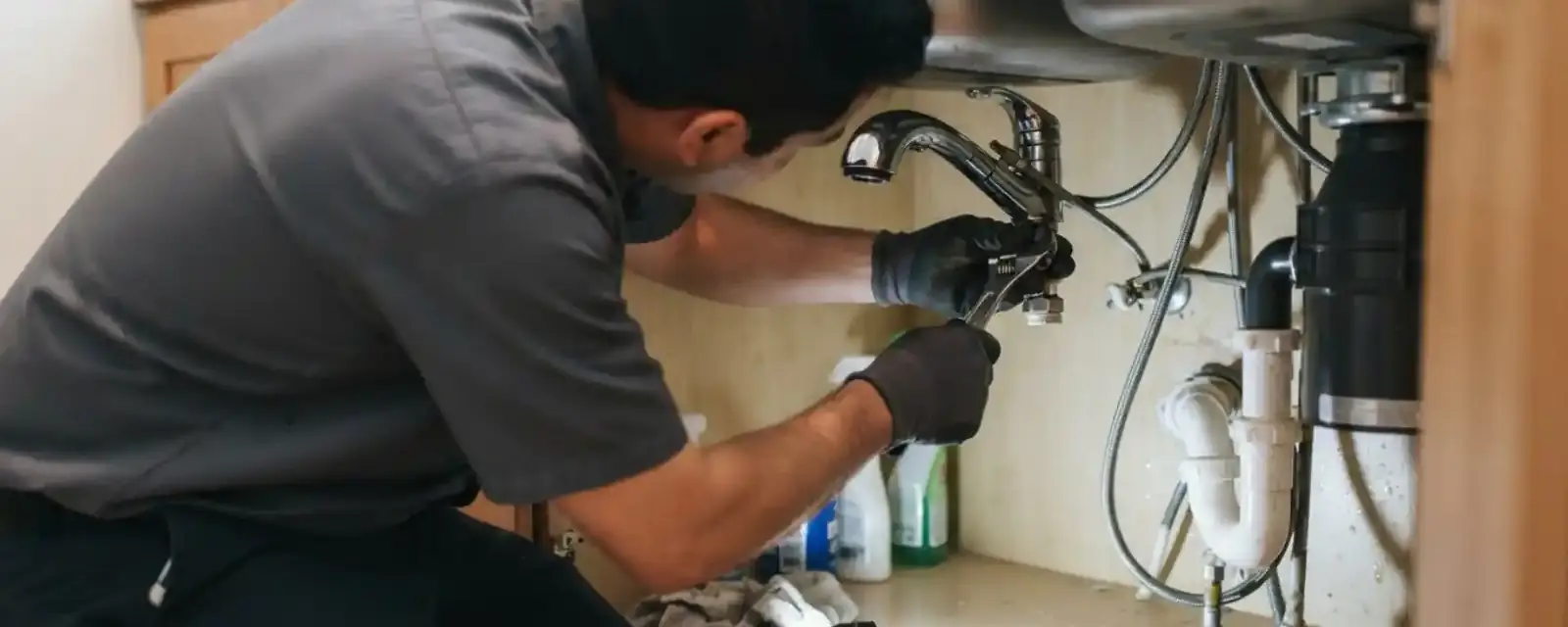
Valve will not shut off or water is spraying: what to do
- Look under the sink for the two small stop valves, turn them clockwise to close.
- If a valve will not turn or keeps leaking, close the main water shutoff.
- For a tub or shower valve with no stop, the main is the only way to stop the water.
- Call and say which fixture and whether the main is closed.
Water spraying and nothing will shut it? Call now.
Why faucets drip, and what actually fixes them
| Type | What wears out | Repair |
|---|---|---|
| Cartridge faucet | O-rings or the cartridge | Replace the cartridge. |
| Ball faucet | Seats, springs and the ball | Rebuild kit. |
| Ceramic disk | Seals and the disk cylinder | Replace the cylinder. |
| Compression faucet | Rubber washers and seats | New washers and seat dressing. |
| Shower valve | Cartridge or stop | Replace the cartridge, sometimes the valve. |
A drip at the spout means the internal seal is worn. A drip from the base or handle means the O-ring or packing is worn. We match the fix to the faucet and tell you when a replacement is cheaper than parts.
Kitchen sinks, bath faucets, utility sinks and outdoor spigots
Each fixture has its own failure points. Kitchen faucets have pull-down hoses and sprayer connections. Bath faucets have pop-up drains that leak. Utility and laundry sinks have simple stops. Outdoor spigots can split in a freeze and leak inside the wall.
A frost-free spigot can be damaged when a hose stays attached over winter, and the leak shows only when it is turned on again in spring. If you see water inside the wall after a cold snap, call. It may become a burst pipe job.
When a drip is more than a drip
A faucet drip wastes water, and the cost is easy to underestimate over months. A leak under the sink can also rot the cabinet floor or feed mold. Check the cabinet for stains.
If your bill climbs and you cannot find the source, test with your water meter before assuming it is a faucet. Our leak detection page explains how. Sink drains that run slow belong to drain cleaning and garbage disposals have their own page.
Beaverton's water is soft, so faucets here collect less scale in aerators and cartridges than in hard-water areas. Wear on seals is still the main cause of drips.
Replacing a fixture instead of repairing it
Older fixtures from the 1960s through the 1990s may not have replacement parts. If the parts cost close to a new faucet, replacing is usually better. You can buy your own faucet, and we install it.
Tell dispatch the number of holes in the sink and whether you want a pull-down or a straight spout. New installs and remodel rough-ins fall under plumbing installation. When you buy a replacement faucet, look for NSF/ANSI 61 on the box, the standard for components that touch drinking water. Installs follow the Uniform Plumbing Code (UPC) as Oregon has adopted it.
What affects the price
- Repair or replacement. A cartridge costs less than a new faucet.
- Fixture type. Shower valves take more work than a sink faucet.
- Stop valves. Old stops that fail add a part.
- Access. Tight vanities slow the job.
- Hours. Emergency calls follow emergency rates, quoted first.
Faucet repair questions
Yes. Dispatch is open at all hours. Close the stop valve or the main, say which fixture is leaking and a plumber is assigned.
If parts are available and the faucet is in good shape, repair is cheaper. When parts cost nearly as much as a new faucet, or the finish is failing, replace it.
Slow drips mean a worn internal seal. They still waste water, so book a visit soon.
Use the main shutoff to stop the water and call. Old stop valves often fail when they are turned after years of sitting, and replacing them is a routine fix.
Yes. Most are a cartridge swap, though a corroded valve body may need replacing, which means opening the wall.