
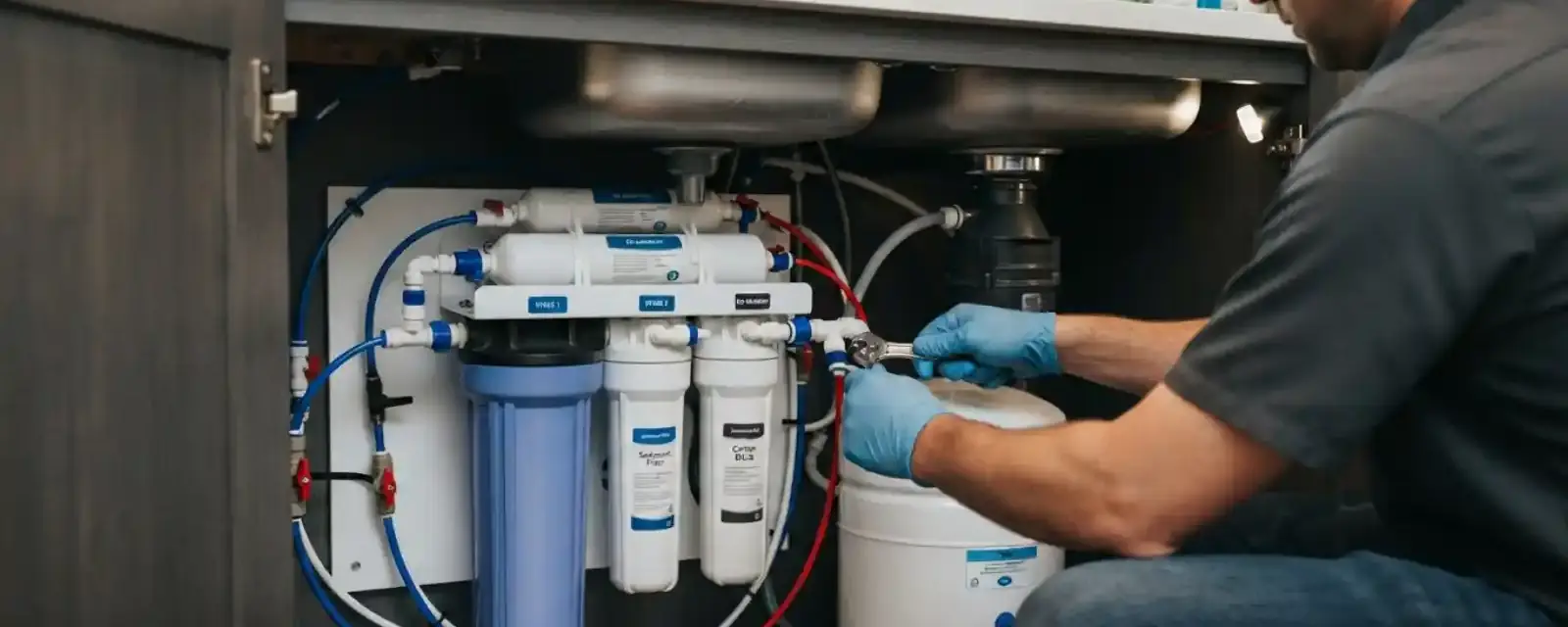
Start with what is in your water
Pick a filter for a problem you actually have. The City of Beaverton publishes a water quality report. Its water comes mainly from the Joint Water Commission plant on the upper Tualatin River, and the report describes the supply as soft, typically 1.5 to 3 grains per gallon, with a pH range of 7.2 to 8.2.
The report also says lead measured 2 parts per billion at the 90th percentile against a 15 ppb action level, and that the City knows of no lead service lines. That is the City's data for its system. Your own faucet can differ if your house has old interior plumbing. A filter certified for lead reduction is a reasonable choice if your home is old, and the certification label tells you what it covers.
Types of under-sink systems
| Type | What it does | Considerations |
|---|---|---|
| Carbon block filter | Reduces chlorine taste and some contaminants | Simple, small, replace on schedule. |
| Multi-stage filter | Sediment plus carbon and sometimes more | Larger housings, check cabinet space. |
| Reverse osmosis | Removes dissolved solids and many contaminants | Needs a drain connection, a tank and more space. |
Look for certification to NSF or ANSI standards for the specific contaminant you want reduced. NSF/ANSI 53 covers health-related contaminants such as lead, NSF/ANSI 42 covers taste and odor, and NSF/ANSI 58 covers reverse osmosis systems. The package lists which standards the filter meets. Beaverton's water is already soft, so you are filtering for taste, lead or other concerns, not for scale.
What installation involves
- 1
Check cabinet space and the faucet.
Measure the space under the sink and check for a spare hole in the sink or countertop for a separate filter faucet.
- 2
Shut off the cold supply.
Close the cold stop valve under the sink and open the faucet to relieve pressure.
- 3
Tee into the cold line.
A saddle or tee valve feeds the filter. Compression fittings should be snug, not overtightened.
- 4
Mount the housing and run the tubing.
Keep tubing clear of the garbage disposal and the sink drain trap.
- 5
Flush and check for leaks.
Flush the new filter for the time the manual says and check every fitting after an hour and again the next day.
Reverse osmosis adds a drain saddle on the sink drain, which has to be placed above the trap, and the unit's tank needs room. If your sink has a disposal, the layout gets tight, which is where a plumber helps. See plumbing installation.
Local note: permits, rentals and who can do what
A simple under-sink filter is a fixture-level job. Ask the Beaverton building department if a permit applies to your setup, and ask your landlord before making changes if you rent. About 52 percent of Beaverton homes are rented, per the 2020 Census, so this comes up often.
If you want a whole-house filter or a softener, that is a different project. Beaverton's water is already soft, so a softener would add little here. Hillsboro's water is also soft, at 1.21 to 1.86 grains per gallon per its 2024 report, which matters if your house is on the west side, see the Hillsboro page.
Maintenance and costs to expect
- Replace cartridges on the manufacturer's schedule. An old filter can stop working and harbor bacteria.
- Write the install date on the housing.
- Keep a wrench and spare O-ring in the cabinet.
- Check under the sink for dampness every few months.
Costs depend on the system type, your cabinet and whether a drain line or faucet needs adding. We give a clear price before work starts. Call to book a visit.
Common installation mistakes to avoid
- Overtightening plastic compression fittings, which cracks them.
- Running tubing where the garbage disposal can chew it.
- Skipping the initial flush, which leaves carbon dust in the first glass.
- Placing a reverse osmosis drain saddle below the trap, which lets sewer water back up.
- Forgetting to open the filter's inlet valve after install.
Most mistakes show up as a slow drip or a bad taste. Check the cabinet floor with a dry paper towel the next morning. A single wet spot means a fitting needs another look.
A filter does not replace testing
If you have a health concern about your water, a certified lab test of your own tap tells you more than a utility report can. A filter's label lists what it is certified to reduce. Match it to the result, not to a brand claim.
Need help with the install or a leaking fitting? Call to schedule a plumber.
Keep the paperwork
Save the manual, the model number and the certification sheet. When a cartridge is due, you need the exact part number, and when you move you may want to take the housing with you or hand the details to the next owner.
Water filter questions for Beaverton homes
No. The City's report describes it as soft, typically 1.5 to 3 grains per gallon, so a filter is for taste or contaminant concerns, not scale.
The City reports lead at 2 ppb at the 90th percentile and knows of no lead service lines. Interior plumbing in old homes may differ, so a certified filter is a reasonable precaution if you are concerned.
Many homeowners can. Leaks, tight cabinets and reverse osmosis drain connections are where a plumber helps.
Often yes, with careful layout. Measure the cabinet before you buy.
Follow the manufacturer's schedule, commonly every six months for a basic cartridge.